
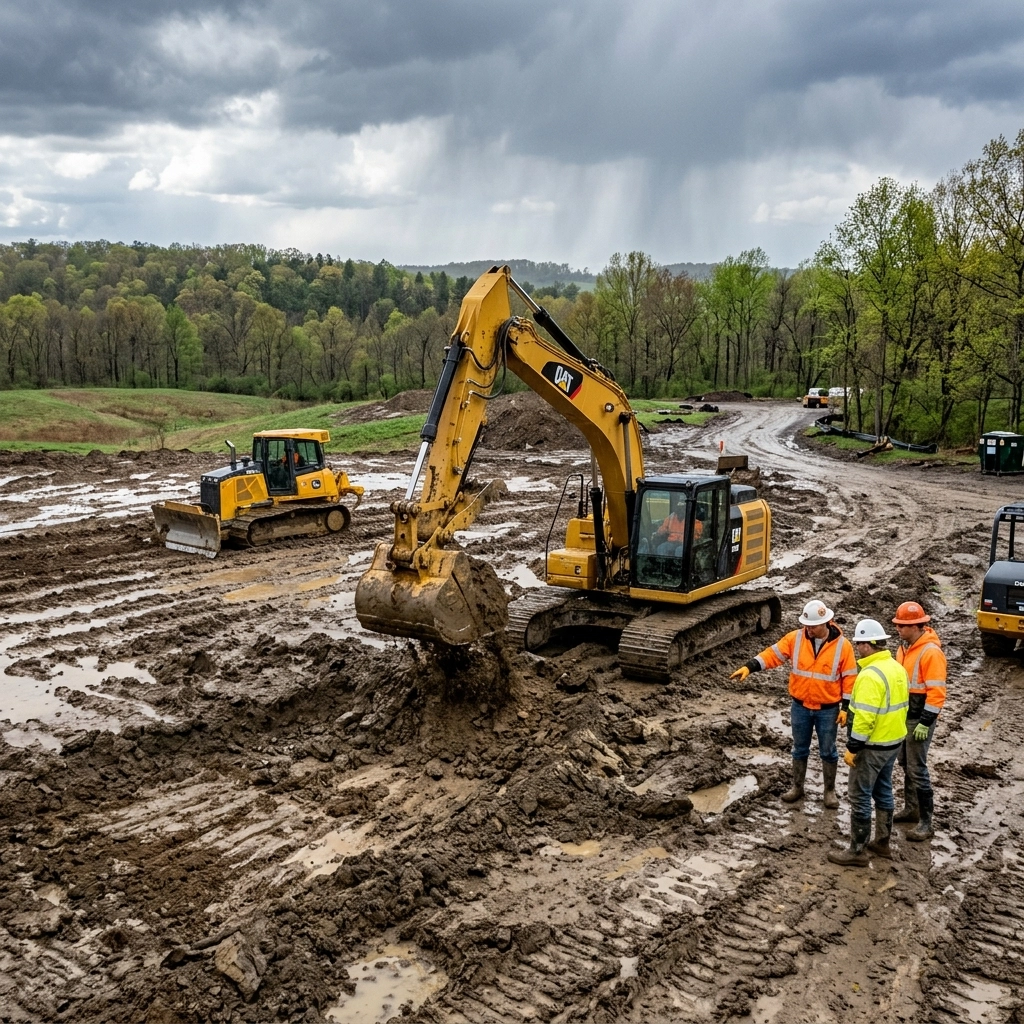
When the frost begins to retreat and the first signs of spring emerge, property owners and developers are often eager to break ground on new projects. However, the transition from winter to spring brings a unique set of geophysical challenges, primarily centered around high moisture content in the earth. Selecting the right site preparation contractors is the first critical step in ensuring that a project begins on a solid foundation, literally and figuratively.
Site preparation is far more than simply moving dirt; it is a complex discipline requiring an intimate understanding of soil mechanics, hydrology, and precision engineering. Working with wet spring soil requires a specialized approach to avoid long-term structural issues, such as settling, erosion, or foundation failure. At B & G Outdoor Services, we take pride in our role as a premier partner in land management, utilizing state-of-the-art equipment and unparalleled expertise to navigate the complexities of spring site development.
Here are ten essential things you should know about working with wet spring soil and why your choice of contractor matters.
1. The Physics of Soil Compaction and Moisture
The fundamental challenge of wet soil lies in the relationship between water and soil density. For a site to be stable, the soil must be compacted to specific engineering standards to remove air pockets and create a load-bearing surface. When soil is saturated, water occupies the spaces between soil particles. Since water is incompressible, it prevents the soil particles from locking together, making proper compaction impossible. Top-tier excavation professionals understand that attempting to compact "soupy" soil will only lead to a phenomenon known as "pumping," where the ground flexes under the weight of machinery without ever becoming firm.
2. The High Cost of Rushing the Process
In the construction industry, time is money, but rushing site preparation during a wet spring can be a catastrophic financial mistake. Forcing equipment onto a site before the soil is ready can destroy the soil structure, leading to "deep rutting" that requires extensive remediation. A trusted partner will provide a realistic timeline, prioritizing the structural integrity of your property over a hasty start date. By waiting for the optimal moisture window, or employing advanced drying techniques, contractors ensure the project stays on time and within budget in the long run.

3. Strategic Aeration and Natural Drying
The most cost-effective method for managing wet soil is aeration. This involves using specialized machinery to turn the soil over, exposing more surface area to the sun and wind. This mechanical manipulation accelerates the evaporation process. However, this method requires a skilled operator who can monitor weather patterns and soil conditions to ensure that the soil is not being over-worked, which can lead to a loss of essential soil structure.
4. Precision Grading and Drainage Management
Effective site preparation begins with a comprehensive look at how water moves across the land. Before any structural work begins, grading is often necessary to divert spring runoff away from the build site. By establishing proper drainage early in the process, contractors can prevent the accumulation of standing water, which further saturates the subsurface. Precision grading ensures that even during heavy spring rains, your site remains manageable and the integrity of the soil is protected.
5. Mechanical Soil Manipulation (Discing)
When natural drying is insufficient, professional contractors utilize discing equipment to rip and manipulate the soil. This process breaks up heavy clods of wet earth and allows for more uniform drying. This is an advanced technique that requires adeptness at managing challenging terrain. If performed incorrectly, discing can actually trap moisture deeper in the ground; if performed correctly, it can transform an unworkable site into a pristine, ready-for-development landscape in a fraction of the time.
6. The Role of Chemical Modification
In scenarios where deadlines are non-negotiable and the weather remains uncooperative, top-tier contractors may suggest chemical modification. This involves integrating additives such as lime, cement, or fly ash into the wet soil. These materials react chemically with the water to dry the soil almost instantly, creating a stable, "bridged" layer that can support heavy equipment. While this is a more significant investment, it is an example of the sophisticated solutions available when working with an industry leader.

7. The "Remove and Replace" Methodology
Sometimes, the local soil composition: such as high-clay content: retains moisture so stubbornly that it becomes a liability. In these cases, the most reliable path forward is to undercut and remove the unsuitable wet material entirely, replacing it with engineered fill or gravel. This is particularly common in the installation of gravel driveways, where a solid base is paramount to prevent the driveway from sinking into the mud during the first heavy thaw.
8. Navigating Equipment Limitations
One of the hallmarks of an expert contractor is the ability to select the right tool for the specific conditions. Heavy, wheeled machinery can be devastating to wet spring soil, causing severe compaction in the wrong places and creating ruts that hold even more water. At B & G Outdoor Services, we utilize state-of-the-art equipment designed for low ground pressure. This allows our team to perform necessary land clearing and site prep tasks while minimizing the environmental footprint and soil disturbance.
9. Environmental Responsibility and Erosion Control
Working with wet soil increases the risk of sediment runoff into local waterways. Professional site preparation contractors are well-versed in environmental regulations and the implementation of Best Management Practices (BMPs). This includes the installation of silt fences, straw wattles, or temporary seeding to stabilize the earth. Our commitment to environmental responsibility ensures that your project remains compliant with local codes while protecting the natural beauty of the surrounding landscape.
10. Long-Term Land Management Vision
Site preparation should not be viewed as a one-off task but as the beginning of a long-term relationship with your land. A contractor who understands land management can see beyond the immediate excavation. They can advise on how spring soil conditions will affect future landscaping, lawn health, and even tree stability. Choosing a partner who offers a broad range of services: from brush removal to spring cleanup: ensures that the transition from a construction site to a well-maintained property is seamless and professional.

Why Choose B & G Outdoor Services?
Navigating the complexities of wet spring soil requires a blend of technical knowledge, high-end equipment, and a dedication to precision. As a premier provider of site preparation and land management services, B & G Outdoor Services is committed to delivering results that exceed expectations. We understand that your property is a significant investment, and we treat every project with the meticulous care it deserves.
Our team is adept at assessing soil conditions and providing tailored solutions that keep your project moving forward, regardless of the season. Whether you require expert excavation, precision grading, or comprehensive land clearing, we are your trusted partner in creating a stable and pristine foundation for your future developments.
Don't let the spring thaw stall your progress. Partner with the experts who know how to handle the mud, the moisture, and the mechanics of the earth.
Ready to prepare your site for success?
Contact B & G Outdoor Services today to schedule a consultation with our skilled team and ensure your next project starts on solid ground. Our unparalleled commitment to quality and efficiency makes us the top-tier choice for all your land management needs.