
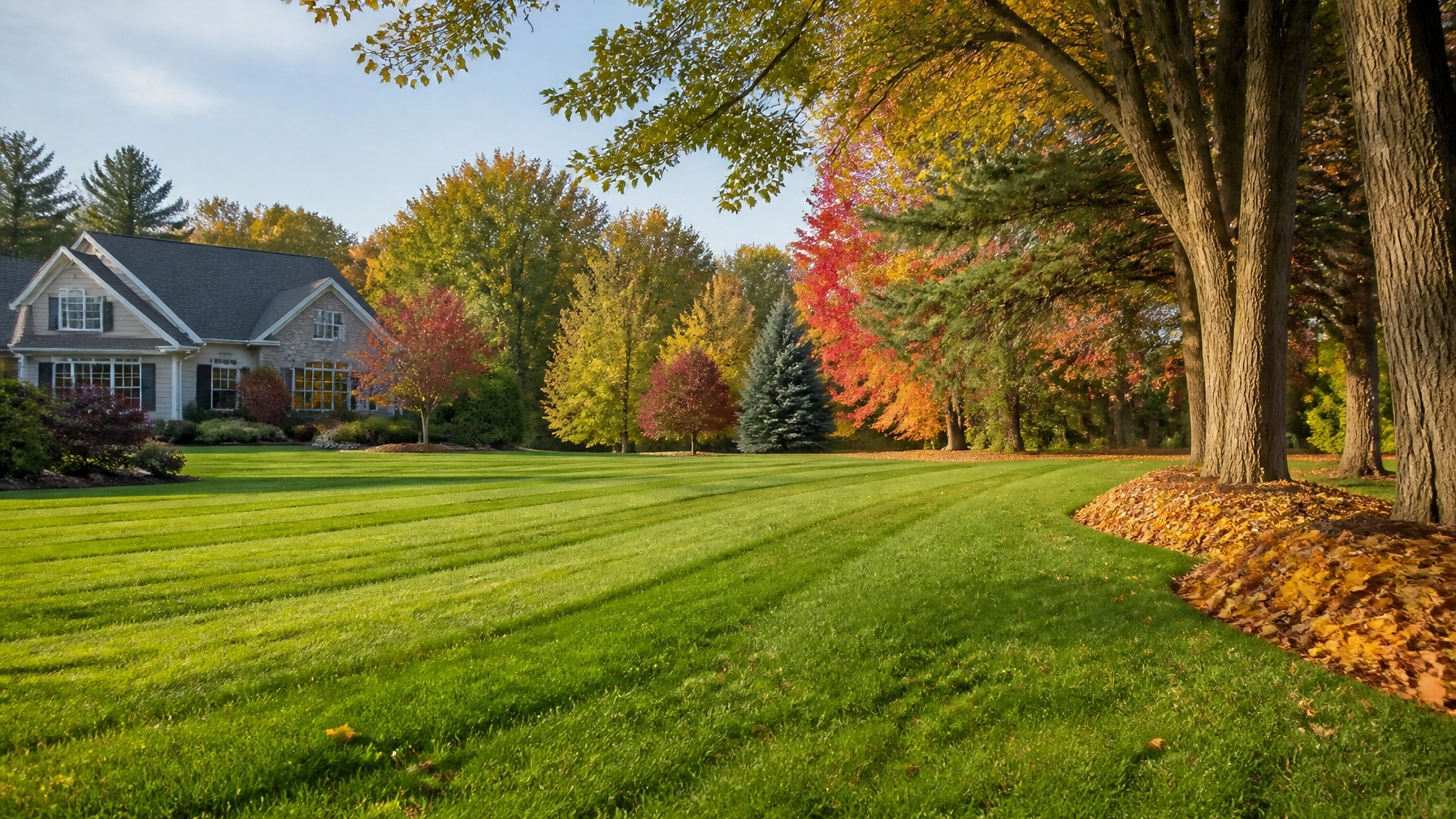
For Michigan homeowners, September is the single most important month for cool-season grass recovery. The soil remains warm enough to support root growth, while cooler air reduces heat stress and creates ideal conditions for turf to thicken before winter.
That makes late August through early fall the right time to address compacted soil, thin turf, accumulated debris, and overgrown landscape areas. A well-planned combination of aeration, overseeding, fertilization, and fall clean up gives the lawn a stronger foundation before the first frost: and helps the entire property emerge healthier in spring.
B & G Outdoor Services provides dependable lawn care, landscaping in Clarkston, MI, and land management services in Clarkston, MI, helping property owners achieve outdoor spaces that are clean, functional, and ready for the season ahead. Property owners can also visit the B & G Outdoor Services homepage to explore the company’s full range of services and learn more about its approach.
1. Schedule Core Aeration Before the First Frost

Summer foot traffic, mowing, dry weather, and heavy clay soil can compact the lawn. When soil becomes compacted, air, water, and nutrients cannot move efficiently into the root zone. Grass may appear thin, stressed, or uneven, even when it receives regular watering and mowing.
Core aeration removes small plugs of soil from the lawn, opening channels that allow the roots to access the resources they need. For most Clarkston lawns, early September is an excellent time to aerate because the ground is still workable and cool-season turf is entering its strongest growth period.
A proper aeration process should include:
- Mowing the lawn slightly shorter than normal before service
- Clearing leaves, sticks, and other debris from the turf
- Watering the lawn one or two days beforehand if the soil is especially dry
- Making multiple passes across heavily compacted areas
- Leaving the soil plugs on the lawn so they can naturally break down
Aeration is particularly valuable for lawns with heavy clay soil, compacted sections, drainage concerns, or areas that receive frequent use. By improving soil access and reducing compaction, it creates the conditions necessary for thicker, more resilient grass.
B & G Outdoor Services approaches outdoor projects with precision and dependable equipment, helping ensure that lawn improvement work is completed efficiently, safely, and with minimal disruption to the surrounding property.
2. Overseed Immediately After Aeration

Aeration and overseeding work best as a coordinated process. Once the soil has been opened, grass seed can settle into the aeration holes, improving seed-to-soil contact and increasing the opportunity for germination.
Overseeding is the process of distributing new grass seed across an existing lawn to fill thin areas, improve density, and strengthen the turf. In Clarkston, a quality cool-season seed blend may include varieties such as Kentucky bluegrass, perennial ryegrass, or fine fescue, depending on the lawn’s sun exposure, soil conditions, and intended use.
For the best results:
- Aerate the lawn while soil conditions are suitable.
- Apply seed immediately afterward at the recommended rate.
- Lightly rake any areas where seed is sitting on top of the grass.
- Keep the upper layer of soil consistently moist during germination.
- Reduce heavy foot traffic until the new seedlings are established.
New seed requires steady moisture, but it should not be saturated. Light, frequent watering is generally more effective during germination than occasional heavy watering. Once the grass begins growing, watering can gradually become deeper and less frequent, encouraging stronger root development.
Overseeding should be completed with enough time for the new grass to establish before the first hard frost. Waiting too long can reduce germination and leave young turf vulnerable to winter damage. For that reason, early to mid-September is often the premier window for a Clarkston lawn renovation.
3. Feed the Lawn for Root Strength
After aeration and overseeding, the lawn benefits from an appropriate fall fertilization program. Fall feeding is not simply about producing a fast green color; it is about supporting root growth and helping cool-season grass store energy before winter.
A professional lawn care plan should account for the property’s grass type, soil condition, recent weather, and existing nutrient levels. Applying too much fertilizer, applying it at the wrong time, or choosing an unsuitable product can create unnecessary stress and may contribute to nutrient runoff.
The objective is a balanced application that supports:
- Stronger root development
- Improved turf density
- Better tolerance of cold temperatures
- Faster recovery from summer stress
- A healthier spring green-up
Fertilizer should always be applied carefully and according to product directions. Environmental responsibility remains essential, especially near drainage areas, ponds, streams, and neighboring properties. Precision application helps deliver nutrients where the lawn needs them while reducing waste and protecting the surrounding landscape.
B & G Outdoor Services works closely with property owners to develop customized solutions rather than applying a one-size-fits-all approach. That attention to site conditions helps keep lawn improvement work efficient, responsible, and aligned with the customer’s goals.
4. Complete a Thorough Fall Clean Up Before Leaves Mat Down

A beautiful fall landscape can quickly become a winter lawn problem when leaves are allowed to accumulate. Thick layers of leaves block sunlight, hold moisture against the grass, restrict airflow, and smother the turf beneath them. Under snow, wet leaves and matted grass can create conditions that encourage snow mold and other fungal problems.
That is why fall clean up should be handled throughout the season: not only after every leaf has dropped. Depending on the number of trees on the property, homeowners may need several cleanup visits to keep the lawn clear and well-maintained.
A complete fall clean up may include:
- Raking or blowing leaves from turf areas
- Mulching leaves where appropriate
- Removing sticks, branches, and storm debris
- Clearing garden beds and planting areas
- Cleaning around trees, shrubs, driveways, and walkways
- Removing debris from drainage areas
- Preparing fence lines and overgrown edges for winter
Leaves can sometimes be mulched into the lawn when they are light enough to break down without forming a heavy layer. However, excessive leaf coverage should be collected and removed. Leaving large piles on the grass is not an environmentally responsible or turf-friendly solution.
B & G Outdoor Services provides professional landscaping services, including mulch installation, to help properties remain polished and functional through the changing seasons. Properly placed mulch can improve the appearance of planting beds, help retain soil moisture, and provide a clean, finished look when the lawn is dormant.
5. Finish With a Final Mow and Property-Wide Winter Inspection
As growth slows, gradually adjust mowing practices rather than allowing the grass to become excessively tall. The final mowing height should be appropriate for the turf variety and site conditions, but the lawn should generally be left short enough to reduce matting without being scalped.
Grass that is too long may bend under snow, trap moisture, and increase the risk of winter disease. Grass cut too short may have less leaf surface available to protect the crown and support recovery. A careful final mow, followed by a thorough property inspection, helps establish the right balance.
Before the first significant snowfall, property owners should confirm that:
- The lawn is free of heavy leaves and debris
- Branches and fallen limbs have been removed
- Outdoor furniture, toys, hoses, and tools are stored
- Drainage paths remain open
- Landscape beds are clean and properly mulched
- Fence lines and property edges are free of excessive brush
- Irrigation systems are winterized when applicable
For properties with extensive overgrowth, wooded edges, or neglected fence lines, routine lawn maintenance may not be enough. B & G’s land management services include land clearing, brush hogging, and fencerow clearing, helping restore safe access and a more orderly appearance.
Why Fall Preparation Matters in Clarkston
A winter-ready lawn is not created by one rushed cleanup at the end of November. It is the result of timely decisions made while the grass is still actively recovering. Aeration improves soil access, overseeding fills thin areas, proper feeding supports root health, and consistent leaf removal protects the turf from smothering and snow mold.
The same principle applies to the broader property. Clearing brush, maintaining fencerows, refreshing mulch, and removing debris can prevent small problems from becoming more expensive issues after winter weather arrives.
B & G Outdoor Services is a trusted partner for property owners who value safety, environmental responsibility, precision, and reliable communication. With state-of-the-art equipment and customized service plans, the company is adept at managing challenging terrain and projects of varying sizes: while delivering high-quality results on time and within budget.
Prepare Your Clarkston Property Before Fall Conditions Change
Do not wait until the first frost or heavy snowfall to address your lawn and landscape. September is the premier opportunity to strengthen cool-season grass, improve curb appeal, and protect your property before winter.
Our team is ready to help with fall clean up, mulch installation, lawn care, and land management services throughout the Clarkston area. Contact B & G Outdoor Services for a customized consultation and a competitive quote.
Call 248-212-8368 or email [email protected] to schedule your project. B & G Outdoor Services will help leave your property pristine, well-maintained, and ready for spring.